My microteaching session was entitled ‘An introduction to embodied knowledge: How do the tools we use influence the work we make, both as artists and a workers in a wider sense?’ My goal was to do a very small intro to the idea of embodied knowledge, given the scope of the time we had, grounding the discussion in my own art practice of using tape. This was to be a jumping off point only; I wanted the meat of the session to be a discussion around tools and embodied knowledge. To emphasise this discursive aspect, I had no visual element apart from the tapes and machines I asked the group to interact with.
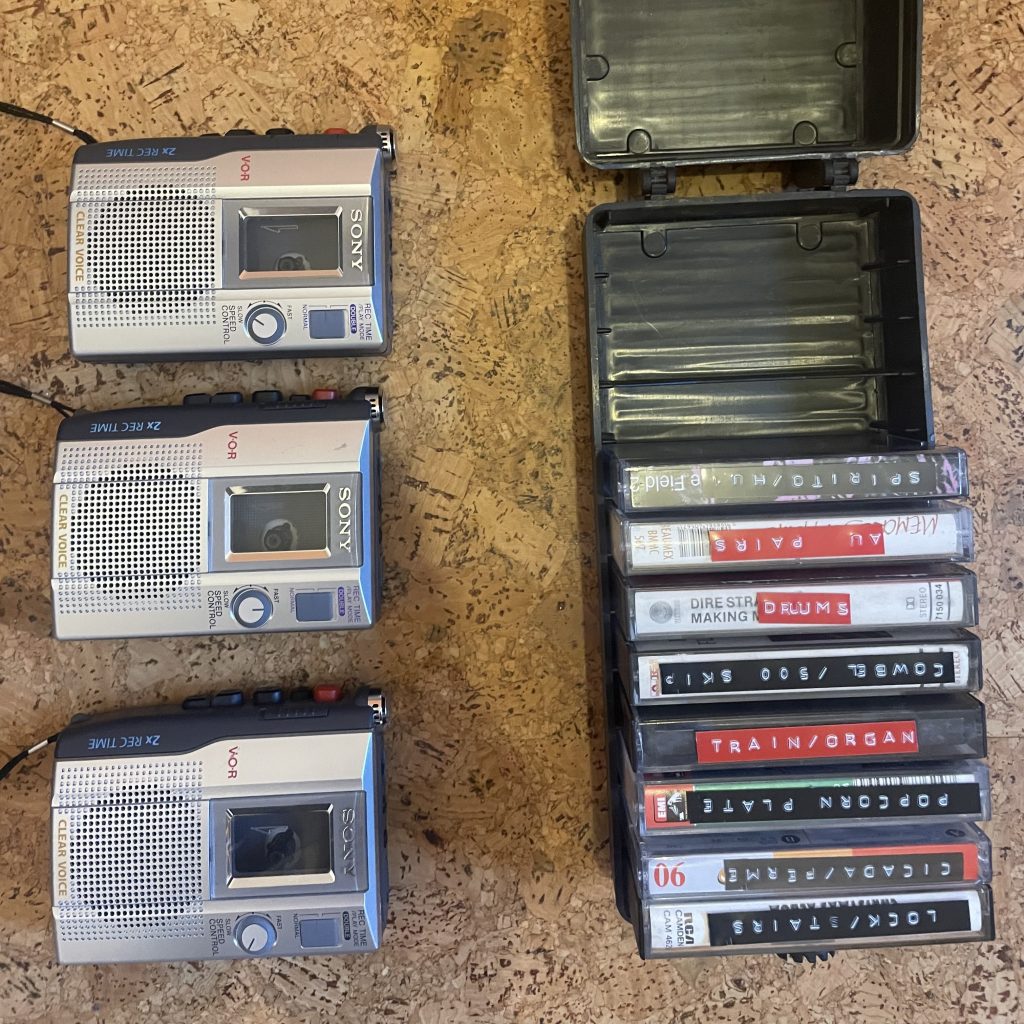
Tape players and machines in preparation
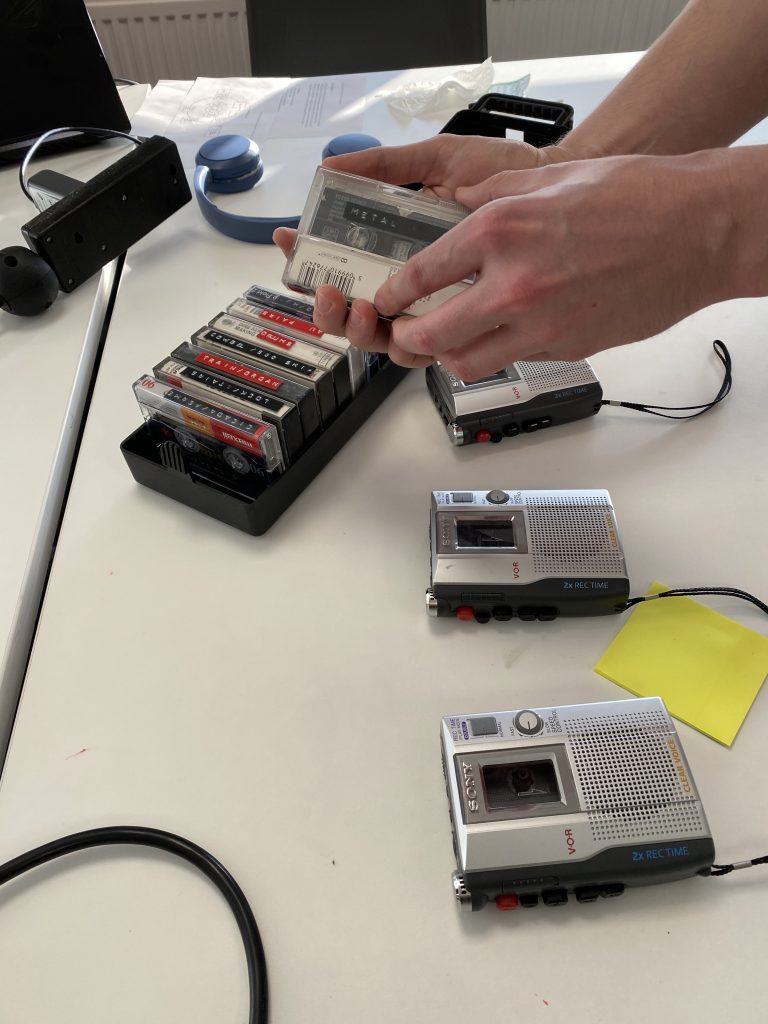
Tape players and machines in session use
I had a written plan to keep to, see below:
In the session itself, the primary challenge was the fire alarm going off halfway though, during our ‘have a go’ section of the plan. This fifty minute gap in the middle threw the flow of the session off a bit, and maybe meant our end concluding section was slightly disjointed from the opening thesis. However, the discursive section went well, and as I had hoped the range of practices and experiences across the group led to a wide ranging conversation around tools and materiality – discussing physical tools versus digital tools, and how students perceive material practices, for example. This was reflected in the feedback I received from my peers on the session, which consistently praised the discussion and my inclusive manner of leading it as a strong element.
I also received some very useful, practical advice on how to improve the session from my peers. These included: having a structured task to work towards, for example me conducting a performance with the machines; bringing in blank tape so the group could record and experiment with their own sounds; me giving a full performance or demonstration, and showing some examples of the lineage and history of tape practice.
Reflecting on my mciroteaching, I felt that the feedback I received was invaluable, as it identified easy to implement practical advice for ‘tape’ element of the session. My deep familiarity with the medium and its artistic history meant that what I had planned as a neutral, context-free engagement with tools was missing key context of what was possible with, and why one would use, this superseded medium for those without my experience.
The small-group discursive section, always my intended primary element, went as much to plan as it could, and I only received positive feedback on this. In a way that is a challenge, as this for me felt like the primary site of learning. In the future, I may want to diverge the two parts, and almost do more sound-focused demonstration work and a more theoretical seminar model session. For example, I could have introduced Bulley & Sahin’s Practice Research as our jumping off point to the same discussion around embodied knowledge, and it may have been a equally valuable session. Though, it would have been less fun and engaging for the participants; this is especially something to consider if adapting this model to work with students.
Leave a Reply